Recycling and Sustainability — Hillingdon House Clearance
Our eco pledge for sustainable rubbish removal
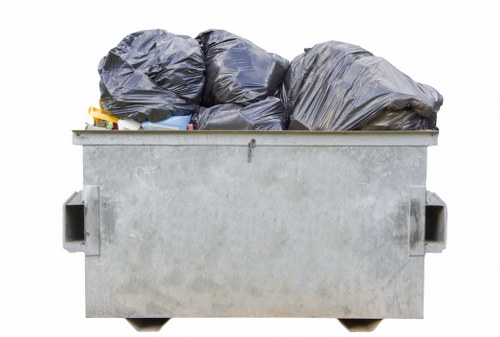 Hillingdon House Clearance is focused on delivering an eco-friendly waste disposal area approach across every job. From single-room clearances to full property clear-outs, our priority is to reduce landfill, increase material recovery and support sustainable rubbish area outcomes across the borough. We work to align with local borough policy on waste separation, encouraging glass, paper, plastic, food and garden waste to be handled in the ways Hillingdon Council and neighbouring authorities recommend.
Our operational standard is simple: sort, salvage and send for re-use where possible. We separate household items on-site so that furniture, textiles and working electricals can be routed to re-use channels, while recyclables go to authorised facilities. By maintaining strict segregation we keep contamination low and maximise value for recycling partners. Every load is assessed before it reaches a transfer station or charity partner.
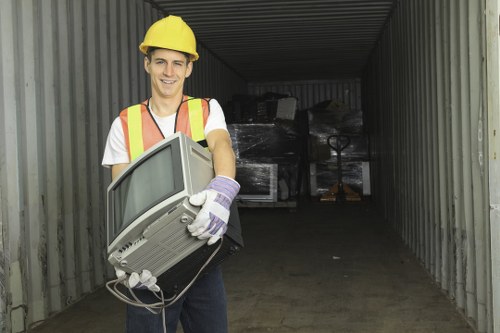 We have set a clear recycling percentage target: 85% of all collected materials should be recovered for re-use, recycling or energy recovery within 24 months of collection. This target covers materials re-used locally through charities or social enterprises, items refurbished for resale and items delivered to licensed recycling centres. It is an ambitious goal that pushes our team to continually improve sorting, storage and routing of materials for sustainable outcomes.
Local transfer stations and authorised facilities
To maintain high recycling rates we work closely with the network of local transfer stations and authorised recycling facilities operating across west and northwest London. These include council transfer facilities, permitted recycling yards and energy recovery facilities. Our logistics are designed to ensure waste goes to the most appropriate facility — for example, segregated wood and metal to specialised recovery plants, textiles to re-use partners and residual waste to vetted energy recovery where needed.
 Partnerships matter. We coordinate collections to local reuse and redistribution centres as well as transfer stations that accept segregated streams. This cooperation reduces double-handling, cuts transport miles and speeds materials into the circular economy. Our routing system prioritises nearby authorised transfer stations to keep journeys short and emissions down, helping to maintain a genuinely eco-friendly waste disposal area service.
Our team also follows the boroughs' approach to waste separation: household recycling streams are kept distinct from bulky items, food and garden waste where applicable. This mirrors local council best practice and aids smoother acceptance at transfer stations. Practical steps include labelling, colour-coded bags and trained staff to oversee separation on-site.
We maintain strategic partnerships with charities and re-use organisations to extend the life of household goods. Typical partners include local charity shops, furniture re-use networks and social enterprises that refurbish small appliances and furniture for affordable community distribution. These relationships ensure that items suitable for rehoming avoid destruction and support community needs.
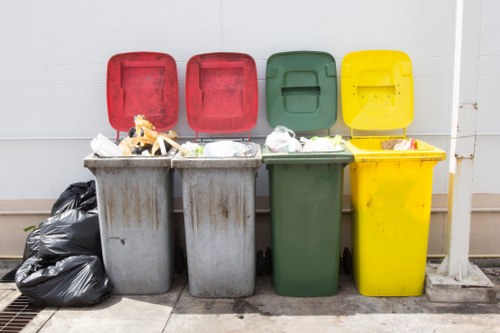 Our charity partnerships enable direct donation routes for many items: furniture that is sound and repairable is offered to re-use charities; clothing and textiles go to charity collections or textile recyclers; and working electrical items are tested and passed on when safe. We track the volumes donated and report these contributions towards our recovery targets.
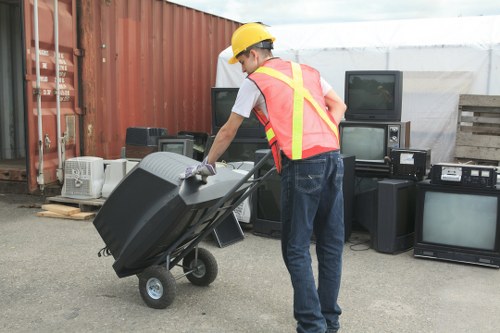 The fleet we operate helps deliver on sustainability. We use a mix of low-carbon vans, including electric vehicles (EVs) and hybrid small vans, plus modern Euro 6 low-emission diesel trucks where electric payloads are not yet available. These choices reduce our carbon footprint, improve air quality on narrow residential streets and complement our emissions-aware routing systems.
Operational measures that support our recycling and sustainability goals include:
- Pre-collection assessments to identify items for donation, recycling or specialist disposal.
- On-site segregation to reduce contamination and speed processing at transfer stations.
- Designated re-use streams for furniture, textiles and small electricals to partner charities.
- Transparent reporting on recovery percentages to continually improve outcomes.
We avoid sending viable goods to landfill whenever possible and are committed to documenting progress against our 85% recycling target. That target is reviewed annually, and we publish internal progress metrics to ensure accountability and to drive improvements in our house clearance in Hillingdon operations.
The combined effect of careful sorting, local transfer station cooperation, charity partnerships and a low-emissions fleet creates a measurable difference in how waste is handled in the area. By choosing a Hillingdon house clearance provider that values sustainable rubbish area practices, residents can be confident their unwanted items are handled responsibly and contribute to a circular, low-carbon future.
We continually seek to expand our network of reuse partners, adopt cleaner vehicles and refine our processes so that house clearance Hillingdon clients see clear environmental benefits and community gains from every clearance project.