Hillingdon House Clearance in Hillingdon

We provide house clearance in Hillingdon for households that need rooms, lofts, garages or entire properties cleared with care and order. The service is set up to remove unwanted items, sort what can be reused or recycled, and leave the property ready for its next stage. Whether the job involves a single bulky item or a fuller domestic clearance, the aim is to keep the process clear, practical and respectful of the space.
Our work covers a wide range of domestic clearance tasks, including furniture removal, mixed household contents, loft clearance, garage clearance and partial home clearance. If you need help after a move, during a refurbishment, before a sale, or when a property has simply become too full to manage alone, we can handle the lifting and removal. Tell us what needs clearing and we can discuss the most suitable approach. If you are comparing options, a short note about access, item types and the size of the job is usually enough to start planning. You can also request a quotation from our team when you are ready.
Many people want the work done without turning the day into a disruption. That is why our service focuses on practical handling, sensible sorting and straightforward communication about what should stay, what should go and what needs special attention. If you are preparing for probate, downsizing, a landlord handover or a family property sort-out, it helps to have a service that can deal with a mixture of items rather than only one category. Clear instructions at the outset make the process smoother for everyone.
Domestic clearance options for different rooms and contents
House clearance is rarely the same from one property to the next. Some jobs are mostly furniture, while others involve boxed belongings, decorative items, old appliances or mixed contents from several rooms. We can work through these items methodically so that usable pieces are separated from materials that need disposal. That approach helps keep the job organised and gives you a clearer sense of what is being removed from each part of the property.
For customers who do not need a full house emptied, partial clearance can be a sensible choice. This might involve one bedroom, a hallway, a storage space or a set of larger items that are no longer needed. A partial service is useful when the property still contains everyday belongings, because it lets you keep control of the parts that matter while removing the clutter or surplus items that are in the way. Pricing and quotes are usually influenced by the volume, access and the type of materials involved, so the more accurate the description, the easier it is to set expectations.
Furniture, appliances and mixed household items
Large furniture often creates the main practical challenge in a home clearance because it can be heavy, awkward to manoeuvre and difficult to dismantle safely in tight spaces. Sofas, wardrobes, beds, tables and shelving all need a different handling approach depending on the room layout and access. Mixed clearances can also include smaller household items, ornaments and general contents, so it helps when the work is planned in a sequence that avoids unnecessary back-and-forth. Careful sorting also makes it easier to identify items that should be handled separately.
Loft, garage and storage-space clearances
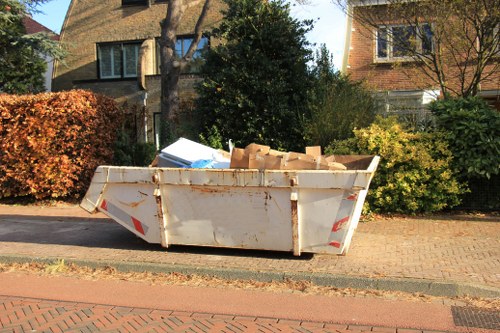
Lofts and garages often become long-term storage areas, which means they may contain a combination of forgotten boxes, seasonal items, broken household goods and leftover furniture. Clearing these spaces can be more involved than it first appears, because access may be narrow, lighting poor or contents piled in layers. We can work through these areas safely and in a practical order, focusing on removal, lifting and sorting rather than rushing through the job.
A garage clearance may also include garden tools, DIY materials, old bicycles, storage cabinets and general clutter that has accumulated over time. Not every item belongs in the same disposal stream, so the work often benefits from being handled piece by piece. When a loft contains insulation, fragile contents or awkwardly packed boxes, it is especially important to keep the method steady and controlled. Organised loading helps reduce the risk of damage to the property and makes the cleared space easier to use afterwards. If the job is straightforward, a brief enquiry is enough to get started.
For many households, these spaces are the easiest place for surplus items to build up because they are out of sight until a move, renovation or family sort-out brings them back into focus. A clearance visit can therefore be useful not only when the space is completely full, but also when you want to recover floor space, reduce weight in the loft or remove the last few bulky items from a garage. Garage clearance can be particularly helpful when the contents have become mixed and no single item category dominates the job.
Full house clearance and probate-sensitive work
Some jobs call for a full property clearance rather than removal from only one room or storage area. This is often the case when a home is being prepared for sale, returned to a landlord, emptied between occupants or cleared after a family change. In those situations, the work may need to cover furnishings, personal effects, boxed items, kitchen contents and belongings from several rooms. The main practical need is to remove the contents in a way that is orderly and consistent from start to finish.
When a property clearance is linked to probate or another sensitive family arrangement, the pace and structure of the job matter as much as the physical removal. Items can have different priorities: some are to be kept, some set aside and some removed. A clear list or room-by-room instruction can help avoid confusion. If you are arranging the work on behalf of someone else, it is sensible to confirm which areas are ready to clear and which still need checking. House clearance remains the broadest domestic option when multiple rooms and item types are involved.
- Clear one room or several rooms at the same visit.
- Separate keepers, donations and items for disposal where instructed.
- Plan access for stairways, parking or narrow internal routes.
- Flag fragile, heavy or awkward pieces before the work begins.
How we handle sorting, lifting and disposal

Good clearance work is not only about loading items into a vehicle. It also involves deciding what needs to be removed, what can be grouped together and which items require more careful handling. We use a straightforward process that starts with the contents and ends with the space being left in a usable condition. That means taking care over heavier objects, protecting surfaces where practical and avoiding unnecessary disturbance to the property.
Sorting is especially important when a clearance includes a mixture of furniture, textiles, bags, boxed items, electrical goods and general household waste. Some materials need a different disposal route, and a thoughtful approach can keep the process efficient. Where a job includes items that are still suitable for reuse, they can be separated from items that need disposal. Recycling and sustainability is an important part of that process, because it gives context to what happens after the removal stage and helps customers understand how mixed contents may be handled.
Items that often need extra attention
Some household contents are simple to carry but still benefit from careful assessment. Broken furniture can shed splinters or sharp edges, electrical items may need separate handling, and damp or heavy boxed goods may be more awkward than they first look. If a property contains a lot of mixed materials, it is usually best to identify these pieces early so they are not left until the end. That makes the clearance more predictable and helps reduce delays while items are being sorted on site.
Furniture removal and disposal within a house clearance
Furniture is one of the most common reasons people look for a house clearance service. A single sofa, a bedroom set or several pieces of dated furniture can make a room difficult to use, especially if the items are bulky or awkward to move. We can deal with standalone furniture removal as well as furniture that forms part of a broader domestic clearance. This gives you flexibility when the job does not require every room to be emptied.
Some pieces can be handled as straightforward clearance items, while others require more care because of size, weight or condition. Wardrobes, bed frames and large cabinets may need dismantling or additional planning before removal. The same is true where items are located upstairs or in tight corners. If you are comparing options for furniture removal, it helps to think about whether you need furniture clearance as a separate task or as one element of a wider home clear-out. Either way, the aim is to remove the item cleanly and with minimal disruption.
Where only disposal is needed, the service can focus on taking away the unwanted pieces without involving a full household sort. That can be useful after redecorating, replacing older furniture or preparing a room for a new purpose. A practical, item-by-item approach also helps when the furniture has been assembled over time and does not all need the same handling. Keeping the scope clear at the outset is usually the fastest way to match the service to the job.
About Hillingdon
Hillingdon is one of the larger districts in west London and is notable for combining suburban neighbourhoods, historic settlements and major transport corridors within the same borough. It includes places such as Uxbridge, Ruislip, Hayes, Northwood and West Drayton, each with its own identity and built form. The area has long stretches of residential streets, older village centres and more modern development, reflecting the way west London expanded through the twentieth century. Parts of the district still preserve a sense of older Middlesex settlement, with parish churches, local high streets and pockets of green space sitting alongside busy roads and railway lines. The Grand Union Canal passes through the borough, adding a waterway that has shaped movement and industry over many years. Hillingdon also contains large open spaces such as Ruislip Woods National Nature Reserve and several parks and commons, which give the district a greener character than many inner parts of the capital. Historic buildings and civic landmarks appear across the area, including older houses, churches and surviving village features that sit close to newer shopping streets and housing estates. This mix of heritage and everyday suburban life means the district has a layered urban pattern rather than a single uniform centre. It is also one of the outer London boroughs where transport links, local commerce and residential neighbourhoods meet across a broad geography, making it a distinctive part of the capital's western edge.
Planning a clearance visit with clear instructions

A good clearance starts with a clear picture of what needs to go. It is helpful to note the rooms involved, the kind of items present and whether any pieces are especially large, fragile or difficult to reach. If access involves stairs, tight hallways, limited parking or a shared entrance, those details can shape the plan as well. This is not about overcomplicating the job; it is about making sure the right resources are used for the right kind of clearance.
Photographs can be useful when a property contains a varied mix of contents, but they are not the only useful detail. A short written summary works well for many enquiries, especially if you can say whether the work is a full house clearance, a partial clearance or a single category such as furniture or garage contents. Contact us when you are ready to outline the job, and we can take it from there. If you prefer to compare different parts of the service first, the broad service pages are a useful place to start.
When a clearer brief saves time
The more specific the instructions, the easier it is to plan the visit sensibly. For example, if certain items must stay in place, it helps to identify them before the clearance begins. If a room contains both keepers and removals, it is useful to explain how they are separated. This type of detail reduces hesitation on site and helps avoid confusion about what should be taken away. It can also be useful where several people are involved in the decision-making and need the same understanding of the plan.
Clearance for flats, maisonettes and smaller properties
Not every house clearance takes place in a house. Flats and maisonettes often have their own access challenges, from shared corridors and upper floors to limited parking and tighter room layouts. The service can be adapted to these settings by keeping the movement of items controlled and by planning the order in which rooms are cleared. This matters when bulky furniture has to move through communal areas or when a property has been fully furnished in a compact space.
Clearances in smaller properties often require close attention to what remains after the main items are removed. A room may contain fitted storage, boxed belongings or smaller contents that are easy to overlook until the larger pieces are gone. That is why a methodical approach is helpful even when the job seems modest at first glance. If you are dealing with a compact property rather than a traditional house, flat clearance may be the best match for the task. The same practical principles still apply: sort, lift and remove in an orderly sequence.
Where a flat is being vacated between tenancies, emptied after a move or cleared before handover, the main objective is usually to leave it free of unwanted contents without creating extra hassle in shared access areas. Careful planning reduces the risk of delay and keeps the clearance focused on the rooms that matter most. Plain communication is often enough to decide whether the work is a partial or full removal.
Waste removal alongside household clearance

Some customers need more than a traditional house clearance and prefer a service that also covers general waste removal from the property. This can include a mixed load of domestic waste, unwanted household items and material that has built up during a clear-out or tidy-up. When the contents are varied, the main benefit of a broader waste removal service is that it can deal with the collection and disposal in one organised process rather than splitting the job into several separate visits.
Where the contents include building-related leftovers from light renovation or decorating, they may fall outside a standard domestic clearance and need a different approach. In those cases, it helps to describe the material accurately so the right service is chosen. For comparison, waste removal offers a wider route for mixed disposal needs, while domestic clearance keeps the emphasis on household contents and furnishings. This distinction makes it easier to match the job with the right method and avoid misunderstanding about what is included.
When you want the property cleared, the route chosen should fit the contents rather than forcing the contents into a fixed label. That simple rule often leads to a better result and a more realistic quotation. Describe the job as it is, not as you hope it might be, and the clearance can be planned with far fewer surprises. You can also ask for a quotation once you have a clear view of the items involved.
Booking the right service for your property
Different properties and different contents call for different choices, even when the overall aim is the same. A room-by-room clear-out may suit one home, while another needs a full property emptied in one visit. Some customers want furniture removed from a single space; others need a larger domestic clearance that includes loft storage, garage contents and mixed household items. The sensible choice is the one that reflects the actual scope of the work.
If you are unsure whether the job is best described as house clearance, furniture clearance, garage clearance or loft clearance, start with the main contents and the spaces involved. A brief description is usually enough to identify the right route. Home clearance can be a useful option when the work spans several domestic areas but does not require every room to be emptied completely. The key is to match the service to the property rather than squeezing the property into an overly narrow label.
Once the scope is clear, the next step is simply to request a quotation and arrange a suitable time. If you are still deciding, it is fine to begin with a short outline of the rooms and items involved, then refine the details afterwards. That gives you a practical starting point without overcomplicating the process. Simple, accurate information is usually all that is needed to move forward.